

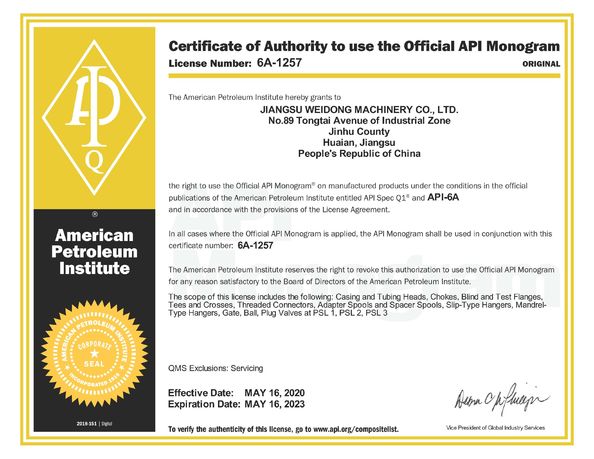
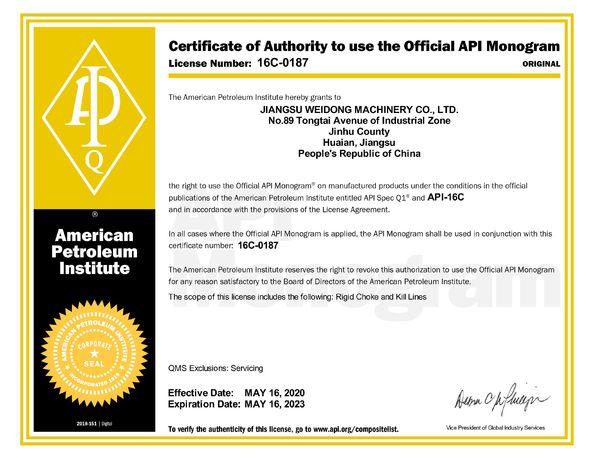

Le PFF High Pressure Gate Valve API 6A se distingue comme un sommet de l'ingénierie des champs pétrolifères, spécialement conçu pour gérer les applications les plus exigeantes de tête de puits et de collecteurs.Utilisation de techniques avancées de traitement des types de forgeage, ces vannes offrent une intégrité structurelle inégalée et des propriétés résistantes à la corrosion essentielles pour les environnements difficiles.avantages industriels, et les avantages opérationnels de la série PFF, allant de 1 13/16" à 9" de taille de trou et de pression de support jusqu'à 20 000 psi.En intégrant la technologie d'étanchéité métal-métal et des corps forgés robustes, CCSC Petroleum Equipment s'assure que chaque vanne répond aux normes rigoureuses de l'API Spec 6A,fournir aux opérateurs mondiaux une solution fiable pour le contrôle des fluides à haute température et haute pression dans les zones géographiques les plus difficiles.
Une soupape de sortie haute pression PFF API 6A est une soupape à mouvement linéaire spécialisée conçue pour l'isolation "on-off" du débit dans les systèmes d'exploration et de production de pétrole haute pression.Définie par l'American Petroleum Institute (API) dans la spécification 6A, la série PFF est dotée d'une porte de dalle parallèle qui assure une chute de pression minimale et un débit maximal.le type de traitement de la forge implique la déformation mécanique du métal chauffé en un corps de soupape de haute résistanceCe procédé crée une structure de grains dense et raffinée qui élimine la porosité interne et améliore la résistance à la fatigue du métal.
Les caractéristiques physiques de la soupape PFF sont régies par sa classe de matériau (de AA à HH) et ses températures nominales (75°F à 350°F).La résistance à la corrosion est obtenue par l'utilisation d'aciers à haute alliage ou de revêtements en acier inoxydable sur des surfaces internes critiques, comme les poches de siège et les rainures d'anneau.augmentation significative de la résistance à la traction et de la ténacité à l'impact par rapport aux méthodes de coulée standardCette précision technique permet à la vanne de maintenir un joint métal-métal étanche à la bulle entre la porte et le siège, même sous des pressions différentielles extrêmes.
En outre, la conception du FFP intègre un mécanisme d'étanchéité bidirectionnel, ce qui signifie que la vanne peut bloquer efficacement la pression soit en amont, soit en aval.La tige est conçue avec une capacité de siège arrière, permettant d'isoler l'emballage de la tige de la pression interne alors que la vanne est en position complètement ouverte, un élément de sécurité essentiel pour l'entretien sur le terrain.depuis les roulements de poussée à grande capacité jusqu'aux surfaces des portes de précision, est conçu pour faciliter un fonctionnement à faible couple tout en gérant des pressions de travail aussi élevées que 20,000 psi.
Pourquoi les ingénieurs de premier plan dans le secteur pétrolier choisissent- ils la soupape de sortie haute pression PFF pour leurs ensembles de têtes de puits?défaillance de l'équipement due à des concentrations élevées d'H2S/CO2Dans des environnements où la chimie des fluides est volatile, l'utilisation d'une vanne standard est une recette pour le désastre.
L'architecture des vannes de porte en acier forgé résout ces risques grâce à plusieurs avantages essentiels:
Fiabilité structurelle supérieure: le type de traitement de forgeage crée un corps de vanne nettement plus robuste que les modèles moulés.Dans les collecteurs haute pression où les vibrations et l'expansion thermique sont constantes, la structure de grain supérieure de l'acier forgé empêche la fissuration par corrosion par contrainte et la déformation structurelle.Cela en fait un choix privilégié pour les vannes à haute température dans l'injection de vapeur ou le forage en eau profonde.
Résistance à la corrosion avancée: pour les opérations impliquant des gaz acides ou de la saumure corrosive, les alliages résistants à la corrosion utilisés dans la série PFF (classe de matériaux DD-HH) fournissent une défense vitale.En utilisant des garnitures et des revêtements spécialisés, les opérateurs peuvent prolonger la durée de vie de leurs équipements dans les environnements chimiques les plus agressifs, en respectant les normes NACE MR0175.
Architecture à faible entretien: la conception du PFF permet de remplacer "en ligne" tous les composants internes, y compris l'assemblage de la porte et du siège." Cela signifie que les équipes d' entretien peuvent entretenir la vanne sans retirer le corps entier de la corde de tuyauterie, réduisant considérablement les temps d'arrêt opérationnels et les coûts de main-d'œuvre dans les plates-formes offshore.
Amélioration de la sécurité par la protection des tiges: une exigence essentielle de l'industrie de la longue queue est la prévention des dommages accidentels.La soupape PFF comprend une broche de tige conçue pour couper si la roue à main est sur-couple, protégeant le mécanisme de la porte interne contre des dommages coûteux.
Les opérateurs ont besoin d'une vanne à pression qui résiste à l'épreuve du temps.les entreprises atténuent le risque de fuites pouvant entraîner des amendes environnementales ou des risques pour la sécuritéL'étanchéité bidirectionnelle et la carrosserie forgée haute résistance constituent une double assurance pour toute opération de forage à haut risque.
La mise en œuvre de l'API 6A de la vanne de sortie haute pression PFF dans un environnement industriel nécessite une compréhension approfondie du niveau de spécification du produit (PSL) et de l'exigence de performance (PR) du système.Dans une configuration typique "Arbre de Noël"Dans ces scénarios, la soupape est soumise à un "flux de limaces" et à des particules abrasives.Le type de traitement de la forge assure que les surfaces intérieures peuvent résister aux effets érosifs du sable et des fluides à grande vitesse.
Pour un responsable des achats ou un responsable technique, il est primordial de choisir la bonne classe de matériau.une soupape de classe DD ou EE (conforme à la NACE MR0175) est requiseLes propriétés résistantes à la corrosion de ces classes impliquent l'utilisation d'un revêtement en acier inoxydable 13Cr ou même en alliage résistant à la corrosion (CRA).lorsque les pressions dépassent fréquemment 10Les exigences de PSL 3 ou PSL 4 imposent des essais non destructifs rigoureux, y compris des inspections par ultrasons et radiographiques du corps forgé.
L'expertise opérationnelle du monde réel dicte également l'utilisation de l'étanchéité bidirectionnelle.La capacité de la soupape PFF à sceller contre la pression des deux côtés garantit que le collecteur reste sécurisé indépendamment de la dynamique du débitEn outre, la technologie d'étanchéité métal-métal utilisée dans l'interface porte-siège repose sur un usinage et un laminage extrêmement précis.Cela garantit que la surface d'étanchéité reste fonctionnelle même lorsque le fluide contient des débris, car le bord avant de la porte nettoie efficacement la surface du siège lors du coup de fermeture.
Les spécifications techniques sont les suivantes:
Taille du trou: 1 13/16 9
Précipitation de travail (WP): 2 000 psi ∼ 20 000 psi
PSL: 1 à 4
PR: 1 à 2
Classes de matériau: AA, BB, CC, DD, EE, FF, HH
Température nominale: -75°F à +350°F (notes K, L, P, R, S, T, U, V)
Le roulement de poussée à grande capacité intégré à l'assemblage de la tige est une autre caractéristique de la conception experte.le couple requis de la roue manuelle est réduit jusqu'à 40% par rapport aux modèles précédentsCela facilite non seulement le fonctionnement de la vanne pour le personnel de terrain, mais réduit également l'usure des fils de la tige.assurer une durée de vie qui dépasse souvent une décennie dans des environnements de production standard.
Q1: Quel est le principal avantage du type de traitement de forgeage pour les vannes PFF?
R: Le forgeage crée une structure interne dense avec un flux continu de grains, ce qui augmente considérablement la résistance mécanique de la vanne et sa résistance à la fatigue sous haute pression par rapport à la coulée.Cela garantit que la vanne reste en sécurité sous des contraintes de fonctionnement extrêmes.
Q2: Comment la caractéristique résistante à la corrosion protège-t-elle les parties internes de la vanne?
R: La vanne utilise des classes de matériaux de AA à HH, incorporant des aciers de haute alliage et un revêtement en acier inoxydable.et autres produits chimiques agressifs dans le fluide du puits.
Q3: Les pièces internes de la vanne API 6A peuvent-elles être changées sur le terrain?
R: Oui, tous les composants internes de la série PFF sont conçus pour la maintenance en ligne.,réduire les temps d'arrêt.
Q4: Quelles sont les valeurs de pression disponibles pour la soupape de sortie haute pression PFF?
R: La série PFF est conçue pour supporter une large gamme de pressions de travail, en particulier de 2 000 psi à 20 000 psi, répondant aux besoins des applications standard et extrêmes à haute pression.
Q5: Quel est le but de la broche de tige dans la conception de la vanne?
R: L'épingle de la tige agit comme un élément de sécurité sacrificiel. Si la roue à main est sur-couple, l'épingle cise pour éviter une force excessive de l'endommager la porte interne et la tige,sauver la vanne d'une défaillance majeure.
Q6: La soupape PFF prend-elle en charge le débit et l'étanchéité bidirectionnels?
R: Absolument. La conception de la porte de la dalle parallèle permet une étanchéité efficace de métal à métal des deux côtés.fournissant une isolation fiable que la pression provienne du côté en amont ou en aval du collecteur.
Le PFF High Pressure Gate Valve API 6A représente une maîtrise du matériel pétrolier,combinant la supériorité structurelle du type de traitement de forgeage avec la résistance chimique des alliages résistants à la corrosionEn adhérant strictement aux normes API Spec 6A, CCSC Petroleum Equipment fournit une solution polyvalente, à faible entretien et extrêmement fiable pour les opérations mondiales de tête de puits et de collecteurs.assurer la sécurité et l'efficacité opérationnelles maximales pour les décennies à venir.
Contactez-nous dès aujourd'hui pour recevoir un devis personnalisé, télécharger notre catalogue complet de produits ou discuter d'une solution de vanne personnalisée adaptée à vos conditions spécifiques.Notre équipe d'ingénieurs est prête à fournir des conseils d'experts pour votre prochain projet de haute pression!
Personne à contacter: Mr. Jason
Téléphone: +86 18672866805


 French


